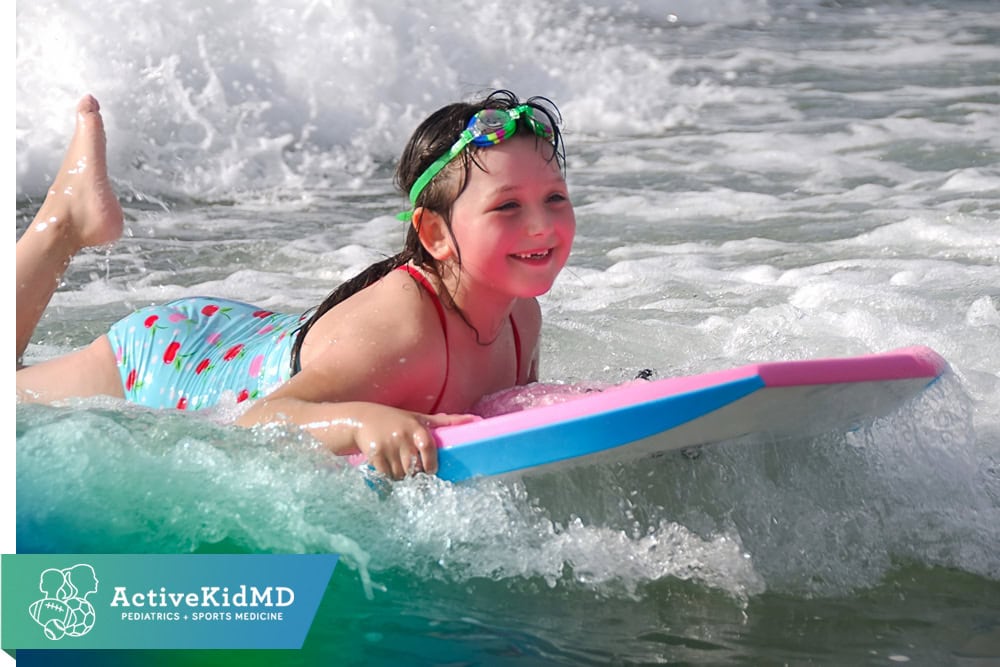
Body boarding and skim boarding are favorite beach activities for children, teens, and families. While they may seem less intimidating than surfing, both sports can lead to serious injuries when riders underestimate wave power, shallow water, or their own skill level.
The good news? Most injuries are preventable. Understanding common risks and practicing a few simple safety habits can help keep your next beach day safe and fun.
If your family also enjoys surfing, be sure to read our companion guide on common surf injuries and prevention strategies: Surf Smarter: Common Surf Injuries and How to Prevent Them.
Respect the Ocean: Your Best Injury Prevention Tool
Whether you are body boarding or skim boarding, understanding the ocean is just as important as mastering technique.
Always:
- Check the surf conditions before entering the water.
- Be aware of rip currents. If caught in a rip current, remain calm, swim parallel to the shoreline until you’re free of the current, then angle back toward shore.
- Avoid crowded riding areas.
- Never participate under the influence of alcohol or drugs.
- Know your limits and progress gradually.
 Enter the Water Only Where Lifeguards Are Present
 Enter the Water Only Where Lifeguards Are Present
One of the simplest—and most effective—ways to reduce serious injuries and improve survival during an emergency is to enjoy the ocean at beaches staffed by professional lifeguards. Lifeguards can identify dangerous surf conditions, recognize rip currents, respond rapidly to injuries, and provide lifesaving care when seconds matter.
Whether body boarding, skim boarding, surfing, or simply swimming, choosing a beach with lifeguards is one of the smartest safety decisions you can make.
Body Boarding: Small Board, Big Waves
Body boarding allows riders to catch waves while lying on a shorter board, often using swim fins for propulsion. Because riders frequently catch waves close to shore, many injuries occur in the “impact zone,” where powerful breaking waves meet shallow water. Even relatively small waves can generate enough force to drive a rider into the sand.
Common Body Boarding Injuries
Neck and Spine Injuries
The most serious injuries occur when riders “nosedive” into the sand. As the board suddenly stops, the body continues moving forward, forcing the head and neck into the ocean floor.
Although uncommon, these injuries can lead to cervical spine fractures or spinal cord injuries.
Head and Facial Injuries
Collisions with the board, fins, sand, reefs, or other riders may cause:
- Concussions
- Facial cuts
- Broken noses
- Dental injuries
- Eye injuries
Abdominal Injuries
The front edge of the body board can strike the abdomen during a wipeout, occasionally causing significant bruising or injury to internal organs.
Sprains, Cuts, and Abrasions
Hands, wrists, ankles, and knees are commonly injured when riders lose control in turbulent water. Contact with fins, reefs, or the board itself can also produce painful cuts and abrasions.
Tips to Reduce Body Boarding Injuries
 Tips to Reduce Body Boarding Injuries
Fortunately, many injuries are preventable with proper technique.
Learn to Wipe Out Safely
If you lose control on a steep wave:
- Never dive headfirst.
- Cover your head and neck with your arms.
- Allow yourself to tumble with the wave rather than resisting it.
Ride Across the Wave
Instead of traveling straight down a steep wave, angle your ride across the face of the wave. This reduces the chance of the board digging into the sand and causing a dangerous nosedive.
Wear the Right Equipment
Protective equipment can make a difference.
Consider using:
- A properly fitted watersports helmet when riding over reefs, rocks, or in particularly shallow conditions
- A quality leash to prevent losing your board
- Well-fitting swim fins designed for body boarding
Skim Boarding: Fast Speeds in Shallow Water
 Skim Boarding: Fast Speeds in Shallow Water
Skim boarding is performed in just inches of water as waves recede from the shoreline. Riders sprint, drop the board onto the wet sand, jump aboard, and glide across the surface before performing turns or tricks.
Although it looks simple, skim boarding combines speed, balance, and rapid direction changes—all ingredients for injury.
Because skim boarding takes place on hard-packed wet sand rather than deeper water, falls often occur at high speed with little cushioning.
Common Skim Boarding Injuries
Fractures
Fractures are among the most common serious skim boarding injuries. Because riders often fall forward while running at full speed, the instinct to brace with an outstretched hand frequently results in fractures to:
- Ankles
- Wrists
- Forearms
These injuries often occur after falling onto an outstretched hand or twisting a planted foot.
Ankle Injuries
Quick rotational movements while the foot remains planted can produce:
- Ankle sprains
- Ligament tears
- Fractures
Wrist Injuries
Many riders instinctively reach out to break their fall, leading to wrist sprains or fractures.
Cuts and Bruises
Falls onto wet sand or direct contact with the board commonly result in:
- Abrasions
- Contusions
- Lacerations
Tips to Reduce Skim Boarding Injuries
Master Board Placement
One of the most important skills is learning how to drop the board flat onto the water. A board that lands unevenly is more likely to catch an edge, stop suddenly, and throw the rider forward.
 Enter in a Straight Line
Running and approaching the board from the side increases the likelihood of losing balance.
Instead:
- Run in a straight line.
- Keep your momentum controlled.
- Step smoothly onto the board.
Learn Before Trying Tricks
Many injuries occur when riders attempt spins or jump before mastering the basics.
Become comfortable with:
- Running starts
- Smooth board drops
- Straight glides
- Controlled stopping
before progressing to advanced maneuvers.
Wear Appropriate Protection
While helmets are not routinely worn by all skim boarders, a properly fitted watersports helmet should be considered when attempting tricks, riding in crowded areas, or skim boarding where there is an increased risk of collisions or falls.
Water shoes can also improve traction during the running approach while helping protect the feet from shells, rocks, and other sharp objects hidden beneath the sand.
The Bottom Line
 The Bottom Line
Body boarding and skim boarding are excellent ways for kids and families to stay active, build confidence in the water, and enjoy the beach together. By learning proper techniques, respecting changing surf conditions, wearing appropriate protective equipment, and choosing beaches staffed by lifeguards, families can dramatically reduce their risk of injury.
Parents should remember that children and younger teens may be fatigued more quickly than adults and are often less able to recognize changing ocean conditions. Close supervision, frequent breaks, and choosing waves appropriate for a child’s experience level can significantly reduce injury risk.
Most importantly, remember that ocean conditions can change quickly. When in doubt, wait for safer surf, ask a lifeguard for guidance, and never push beyond your skill level.
Have fun, respect the ocean, and enjoy a safe day at the beach!