
What Every Parent Should Know
Who is this guide for?
Parents of infants, toddlers, and children who are in or near water — playing in pools, running in sprinklers, jumping in lakes or oceans, and even taking baths.
Why this matters
- Water safety is one of the most important steps you can take to prevent serious accidents with your child.
- Drowning is the leading cause of accidental death in children ages 1–4. It happens quickly and is often silent.
To help families feel confident at home, ActiveKidMD has created a video series with:
- Clear action steps
- When to monitor vs. when to call
- Comfort tips you can use right away
How to use this guide
1. Watch the videos included in this article
2. Bookmark this page for future reference
3. Subscribe to our YouTube channel:
4. Share with family and friends
5. Stay tuned—more videos are on the way
Water play is a big part of childhood—from pools and sprinklers to lakes and bathtubs. But it also comes with real risk. Drowning is the leading cause of accidental death in children ages 1–4, and it happens quickly and silently. The good news: most incidents are preventable with the right layers of protection.
 Start with the most important rule: supervision
 Start with the most important rule: supervision
There is no substitute for active adult supervision.
- Never leave young children alone near water—even for a moment
- Always stay within arm’s reach
- Designate a “water watcher”—an adult whose only job is to actively watch children in or near the water (no phones, no distractions)
This single step saves lives.
Make your home and pool safer
Creating physical barriers is one of the most effective ways to prevent accidents.
- Install a fence that fully surrounds pools and spas
- Fences should be at least 4 feet high, with no climbable objects nearby
- Use self-closing, self-latching gates (latch at least 4.5 feet high)
- Consider pool alarms, but remember, they do not replace supervision or fencing
- If you have a pool, learning CPR is strongly recommended
Also, don’t forget smaller risks:
- Empty buckets, tubs, and containers, even one inch of water, can be dangerous
- Use door locks and toilet latches when needed
 Be cautious with flotation devices
Flotation devices can give a false sense of security.
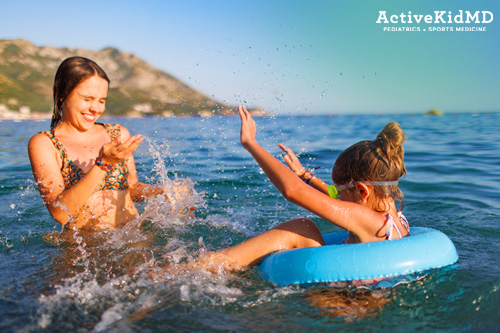
- Do not rely on floaties, armbands, or rafts for safety
- Children can slip off or become trapped underneath them
- The only trusted device is a U.S. Coast Guard–approved life jacket—and even then, it should always be used with close supervision
What about swimming lessons?
Swimming is an important life skill—but timing matters.
- Readiness to learn to swim depends on development, exposure to water, and comfort level
- Under age 3: classes are typically parent-assisted and focused on comfort and play—not independent swimming
- Around age 3: Some children can begin basic skills like floating
- Around age 5: Many children are developmentally ready for more advanced swimming strokes
It’s important to know:
- Swim lessons do not replace supervision
- There is no strong evidence that infant swim programs (under 12 months) prevent drowning
- Lessons should always be taught by certified instructors
 Teach and model safe habits
As children grow, education and example matter.
- Teach kids to never swim alone
- Encourage life jacket use when boating or near open water
- Avoid diving headfirst unless the depth is known and safe
- Talk to older kids and teens about how alcohol or drugs increase drowning risk
Children are naturally curious, and we want to keep them that way, safely.
Layered protection is key
No single strategy is enough on its own. The safest approach combines:
- Active supervision
- Physical barriers
- Swim education
- Safe habits and role modeling
Final thoughts
Water safety comes down to preparation, awareness, and consistency. A few simple habits—like staying within arm’s reach, using barriers, and avoiding overreliance on flotation devices—can make a life-saving difference. By taking a layered approach, you can help your child stay both safe and confident around water.
For more information on water safety, see: https://www.youtube.com/watch?v=SHdLgDe3KmM
If you have questions about water safety, swim readiness, or injury prevention, our team is here to help.