Understanding Symptoms, Testing, Treatment & When to Worry
Who is this guide for?
Parents of infants, toddlers, and children who:
- Think their child may have coughing, sneezing, or skin problems due to allergies
- Have itchy skin
Why this matters
Allergies and eczema are pretty common, but they can still make your child uncomfortable. Most cases are mild, but some symptoms can signal other problems or the need for medical care.
To help families feel confident at home, ActiveKidMD has created a video series with:
- Clear action steps
- When to monitor vs. when to call
- Comfort tips you can use right away
How to use this guide
1 Watch the videos below
2 Bookmark this page for future reference
3 Subscribe to our YouTube channel:
https://www.youtube.com/channel/UC-kk60nTl6iwuCiWfs0yJKQ
4 Share with family and friends
5 Stay tuned—more videos are on the way
Why Allergies and Eczema Often Go Together
If your child has allergies, there is a higher chance they may also have eczema and vice versa.
Allergies and eczema are part of what we call the “atopic triad”:
- Eczema (atopic dermatitis)
- Allergic rhinitis (seasonal allergies/hay fever)
- Asthma
These conditions often run in families and may begin early in childhood.
Let’s break it down so you know what to look for and when to seek help.
Part 1: Allergies in Kids
What Are Allergies?
Allergies happen when the immune system reacts to harmless substances (called allergens) as if they are dangerous invaders. Allergies commonly begin in childhood and may continue throughout life.
Common Environmental Allergy Triggers
You may find these at home or school:
- Dust
- Mold/fungi
- Furry animals
- Products made with animal hair
- Latex
Food allergies may also cause skin, breathing, or digestive symptoms.
Signs Your Child May Have Allergies
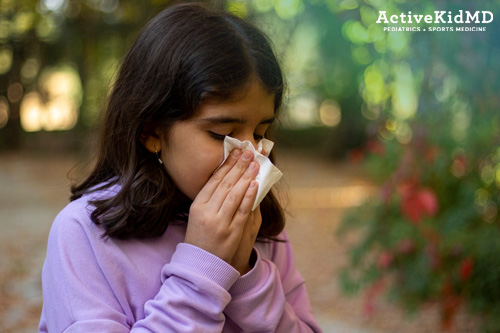 Sometimes it’s obvious. Other times, it looks like a “cold” that never quite goes away.
Look for:
- Runny nose lasting more than 7–10 days
- Symptoms that occur at the same time each year
- Clear, watery nasal discharge
- Nasal congestion
- Frequent sneezing
- Throat clearing
- Nose rubbing
- Sniffling/snorting
- Red, itchy, watery eyes
Cold or Allergies? How to Tell the Difference
Allergies
| Allergies | Colds |
|---|---|
|
|
If your child has itchy eyes and no fever, allergies are more likely.
How Do We Test for Allergies?
There are two primary methods:
1 Blood Testing
- Measures immune response to multiple allergens
- Results graded from 0 (none) to 6 (strong reaction)
- No need to stop allergy medications
Pros: One test, multiple allergens
Cons: Blood draw required; mild positives can be harder to interpret
2 Skin Testing (Performed by an Allergist)
- Small amounts of allergens are placed into the skin
- Reaction graded immediately
Pros: Often more accurate; specialist interpretation
Cons: Mild discomfort; medications may need to be stopped beforehand
The best testing option depends on your child’s symptoms and history.
For more information, see Allergy Signs in Kids – Environmental and Food
Part 2: Eczema (Atopic Dermatitis)
What Is Eczema?
Eczema is a chronic skin condition that makes the skin:
- Dry
- Red
- Itchy
- Sensitive
Eczema is a chronic skin condition that likes to run in families and can occur with other allergic issues, such as asthma and allergic rhinitis/hay fever. Eczema also runs with food allergies. It affects about 1 in 10 children and is not contagious. Eczema occurs because the outer skin barrier does not hold moisture well and allows irritants and allergens to enter more easily.
What Does Eczema Look Like?
Eczema can appear differently depending on age.
In Babies:
- Often starts on the scalp or face
- Rarely appears in the diaper area
In School-Age Children:
- Elbow creases
- Behind knees
- Back of neck
- Around eyes
Eczema tends to:
- Worsen (flares), then tend to get better
Why Eczema and Allergies Are Connected
Children with eczema are more likely to have:
- Food allergies
- Seasonal allergies
- Asthma
If your child has eczema and you suspect food triggers or persistent allergy symptoms, we can help determine whether further evaluation is needed.
How to Treat Eczema
Let’s be honest, eczema takes work.
Daily Skin Care Is the Foundation
Moisturize Early and Often
- Use fragrance-free creams or ointments
- Creams are better than lotions
- Apply at least daily (often multiple times per day)
- Apply to damp skin immediately after bathing
Bathing Tips
- Short, lukewarm baths
- Minimal soap use
- Pat dry (don’t rub)
- Apply moisturizer while skin is still damp
Reduce Irritation
- Choose breathable fabrics (cotton)
- Avoid perfumed soaps or lotions
- Use hypoallergenic detergents
- Keep fingernails trimmed to reduce skin damage
Medications (When needed)
We may recommend:
- Longer-acting antihistamines (once daily preferred)
- Topical prescription treatments for flares
Shorter-acting antihistamines (like Benadryl) can help temporarily but may have more side effects. We recommend the longer-acting products and not Benadryl.
When Should You Worry?
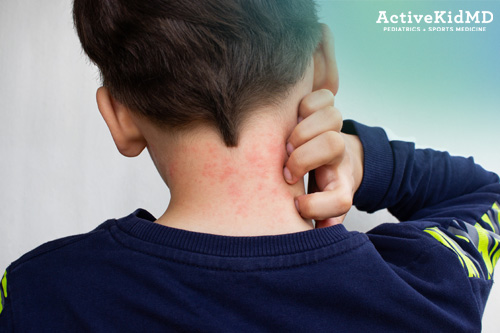 Call us if you notice:
- Yellow or honey-colored crusting
- Oozing or weeping skin
- Blisters
- Rapid worsening
- Hard-to-control eczema
These may indicate infection and need medical evaluation.
Can Kids Outgrow Eczema?
- If eczema begins before age 3, many children improve over time.
- If eczema begins after age 3, it is more likely to persist in adulthood.
Every child is different.
Our Goal at ActiveKidMD
✔ Identify triggers
✔ Reduce flares
✔ Improve comfort
✔ Improve sleep
✔ Create a long-term plan that works
Allergies and eczema are manageable with the right strategy.
For more information, see Eczema: How to Treat and When to Worry
When to Contact ActiveKidMD
If your child has:
- Ongoing sneezing or congestion
- Persistent itchy eyes
- Recurring rashes
- Suspected food reactions
- Hard-to-control eczema
We’re here to help. Schedule an appointment today and let’s create a personalized plan for your child.