

The start of a new calendar year presents opportunities for self-reflection and goal setting.
Setting fitness goals on New Year’s Day (or any other time) can lead to better physical fitness. Better physical fitness can then lead to reduced illness and injury, improved mood and focus, and greater ease with the demands of everyday life.
Many may find these desired outcomes difficult to achieve, and efforts are abandoned within the first few months.
So, how do you set fitness goals you can maintain? How can you break the disappointing cycle of similar but unfulfilled resolutions year after year?
Try these ideas:
 Don’t feel the need to go solo – Bring friends and family along for the ride to build a greater sense of community and encouragement. Creating a team can reduce the likelihood of falling back into older, less-desired behaviors. Having partners in exercise provides the motivation you need on days when you aren’t as up for the challenge (and allows you to return the favor as well).
- Don’t go at it alone (part 2) – If you are uncertain about appropriate exercise, check in with your trusted medical or qualified fitness professional. Get any health issues under control and find recommendations for the type, intensity, and amount of exercise to help you succeed. It’s better to accept and involve modifications in your program than not to try at all.
- Be smart with fitness apps and trackers – enter realistic, accurate data to get the most benefit. A little competition with yourself (more steps per day) is good, just be cautious about overdoing it to get more favorable numbers. Specific trackers and apps can also build an online support community.
- Make a list and check it twice – The most challenging part of a long journey is the first step. Make actual commitments by writing down goals, entering them in a calendar, and creating positive visual reminders. Let others know– not to show off, but to gain a supportive environment genuinely.
- Don’t go too fast, too much, or too soon – Yes, get something started, but again, be cautious and don’t let overexuberance lead to early, sudden, painful detours. One sensible guide to measuring exercise intensity levels is the talk test (this is where that friend thing is helpful).
- If you can talk and take a breath between each sentence, then you are in a good place. Barely getting out a word or two is probably too much, and being able to read this whole paragraph before breathing means you can work a bit harder.
- Keep an eye on the 3-week mark – Many overload bone and soft-tissue injuries occur around 3 weeks after starting a new exercise program. It might be smart to ease off after the second week and give your body an easier recovery week before ramping up the time commitment or intensity of your exercise program.
- Make it fun – Be creative and select something that works for you. Please don’t feel the need to copy someone else or fit into a particular program unless it meets your needs. Enjoyable exercise programs work the best.
- Get up and go – Waking up just a bit earlier for morning workouts can give additional energy and positive accomplishment vibes for the rest of the day. There is much less chance of “something coming up” to interrupt your workout plans first thing in the morning.
- Don’t totally write off the end of the day – Is it tough to find time between soccer practices and household chores? Try walking laps while the kids are at soccer practice, or parking farther from the store. Get the whole family together for a quick stroll through the neighborhood.
- Be a video star – Work in exercise while watching videos or programs. Set a timer or use commercial breaks to step away from the screen and do a set number of push-ups, sit-ups, or even walk up and down stairs.
- End a good workout by preparing for the next one – post-workout foods or beverages that have protein help with muscle repair and recovery. Use the term “30 for 30” – 30 grams of protein within 30 minutes of finishing exercise. Sensible sources include chocolate milk, Greek yogurt, peanut butter, hard-boiled eggs, and trail mix.
- Don’t get down if you fall, get up and start over. One of the benefits of exercise is resilience, both in completing an exercise session and in recovering after missing time. Rather than feeling guilty about unsuccessful attempts, keep a positive attitude and take one step at a time, one day at a time.
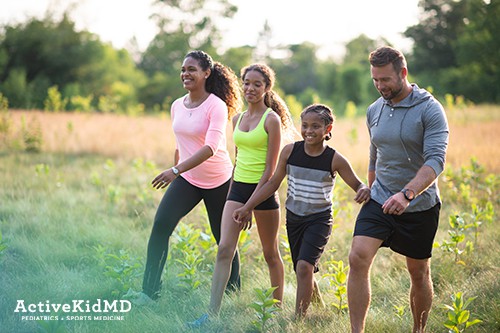 Don’t feel the need to go solo – Bring friends and family along for the ride to build a greater sense of community and encouragement. Creating a team can reduce the likelihood of falling back into older, less-desired behaviors. Having partners in exercise provides the motivation you need on days when you aren’t as up for the challenge (and allows you to return the favor as well).
 Be a video star – Work in exercise while watching videos or programs. Set a timer or use commercial breaks to step away from the screen and do a set number of push-ups, sit-ups, or even walk up and down stairs.
There is a difference between setting short-term fitness goals and moving forward into a long life of healthy habits. Seek to accomplish one thing at a time, honor yourself along the way, and the lifestyle will follow. Remember that fitness is an act of self-care.
Dr. Chris Koutures is a dual board-certified pediatric and sports medicine specialist who practices at ActiveKidMD in Anaheim Hills, CA. He is a team physician for USA Volleyball (including participating in the 2008 Beijing Olympics), the U.S. Figure Skating Sports Medicine Network, Cal State Fullerton Intercollegiate Athletics, Chapman University Dance Department, and Orange Lutheran High School. He offers a comprehensive blend of general pediatric and sports medicine care with an individualized approach to each patient and family. Please visit activekidmd.com or follow him on X (Twitter) (@dockoutures).