
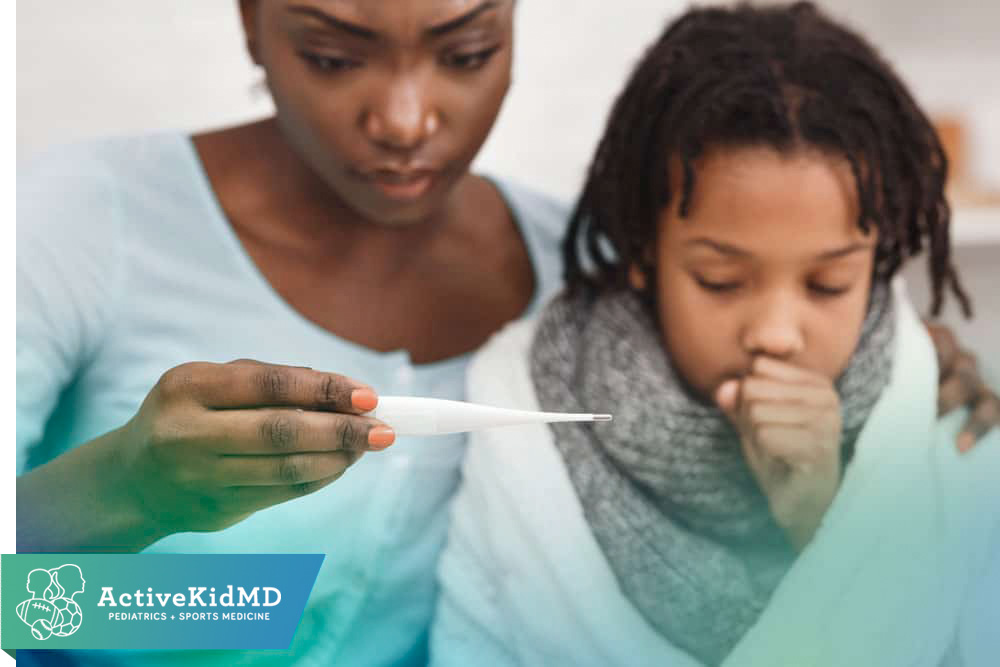
The mere mention or suspicion of fever in a child brings up a sense of fear in many parents and caretakers. While fevers could suggest a more serious medical problem, they also are part of the normal body healing response to an illness. Read on to learn more on how to help a child with fever.
WHAT IS FEVER?
Fever is a significantly elevated body temperature. Unfortunately, because different people have differing “normal” body temperatures (and everyone’s body temperature varies through the day) there is no universally agreed upon definition of fever.
For now, let’s say a child has a fever when the axillary (armpit) temperature is over 99 F (37.2 C), oral temperature is over l00 F (37.8 C), or rectal temperature is over l0l F (38 C). A fever is not an illness by itself, but rather a possible symptom of a medical problem and also part of a normal healthy immune system.
IS FEVER DANGEROUS?
Fever itself is not dangerous until the temperature exceeds 107°F (rectally) and remains at that extreme level for at least a few hours. Even a fever as high as 106 does not cause any brain damage.
In fact, fever may actually help to fight an infection. Increased temperature is our “natural” defense and enhances our ability to fight infection.
Nevertheless, a fever can be important. If fever is present, it usually is a sign of illness. The higher the fever, the more serious the illness may be, so it is often necessary for us to see a child with a fever.
Guidelines on when we should see your child are listed below under “When Should a Parent Call”.
HOW LONG SHOULD A FEVER LAST?
Viral illnesses cause most fevers in children. Usually, with these illnesses, the temperature rises quickly at the beginning and starts to drop after 72 hours. Sometimes the fever will persist for the entire illness. Treating with fever reducers like Tylenol usually lowers the temperature but does not normalize it.
WHAT ABOUT YOUR CHILD’S APPETITE?
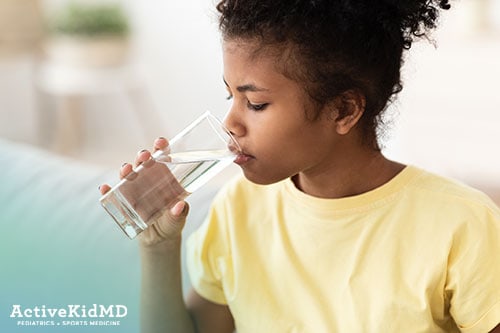
Children (and adults) have little or no appetite when they have a fever. However, while it is normal to refuse solid foods when feeling sick, your child should be able to drink liquids. In fact, a child with fever can benefit from extra fluids, so encourage your child to drink.
A child may lose weight when ill, but will often quickly regain any lost weight once the illness resolves and the appetite returns.
WHAT ABOUT CONVULSIONS FROM FEVER?
Some children may have a seizure or convulsion that is caused by fever. These seizures are called febrile seizures. They are frightening to parents and create much concern. A febrile seizure lasting less than l5 minutes causes no harm or damage.
Remember, most children never have a seizure, and febrile seizures are harmless. Nevertheless, you should call us if your child has a seizure. We need to check that it is a harmless febrile seizure.
HOW SHOULD YOU MEASURE YOUR CHILD’S TEMPERATURE?
The safest way to take a temperature is to measure the axillary (or armpit) temperature:
- Place the tip of the thermometer in a dry armpit.
- Close the armpit by holding the elbow against the side of the chest for 4 minutes.
For older children (usually 5 years and older), you can also measure the oral temperature:
- Be sure your child has not had an extremely hot or cold beverage within l5 minutes prior to inserting the thermometer.
- Place the thermometer tip beside the tongue or inside the cheek.
- Have your child hold the thermometer in place with lips and fingers (not teeth).
- Please have your child breathe through his nose with his mouth closed.
- Leave the thermometer in place for 3 minutes, and then remove.
WHY TREAT A FEVER?
Treating the fever will not treat the illness and does not shorten the duration of the illness. The only reason for treating a fever is to increase your child’s comfort and appetite. If your child is active, playful, and drinking plenty of fluids, you especially do not need to treat the fever. However, if your feverish child is cranky, lowering the temperature can help.
HOW DO YOU TREAT A FEVER?
 The following suggestions will make your child with a fever (who is not complaining of feeling cold and is not shivering) more comfortable:
- Offer frequent liquids
- Dress your child lightly to promote heat loss
- A cool compress to the forehead may bring some relief to your child’s discomfort. It is not necessary to place your child in a tub of water to lower the temperature, but it does work (for a short time). Do not use cold baths or rubbing alcohol.
- Commonly used medicines to reduce fever include Acetaminophen (Tylenol, Tempra or Panadol) every 4 hours or Ibuprofen (Motrin or Advil) every 6 hours. These medications can be safely taken with any other medication (that contains no fever reducer) your child is taking. They can be mixed in any liquid drink or given without mixing.
- Use the recommended doses for child age and weight on the packages or call the office for advice on dosing.
- Do realize that it is common (and normal) for fever to return once the medication wears off.
- Using medication to treat fever may make the overall illness last longer
- There is no need to alternate or mix medicines for fever. If you are going to use medicine to treat a fever, it’s best to select one type (Acetaminophen or Ibuprofen) and stick with it.
SHOULD WE GIVE MEDICATION BEFORE/AFTER VACCINES?
Studies have shown that giving medicines before or after vaccines may reduce the immune response to the vaccines. It is not recommended to administer medication before vaccines to prevent a fever. If your child develops a fever after vaccines, this could be a good sign that they are having a stronger “uptake” of the vaccine. Please do call the office if your child has redness at the shot site, is not using the area where the vaccine was given (arm or leg), or if you have concerns about how your child is doing after vaccines.
CAN MY CHILD EXERCISE WITH A FEVER?
CLICK HERE FOR MORE INFORMATION: Exercise When Sick: How to Make the Best Call
WHEN TO CALL THE DOCTOR?
Your child’s level of awareness and activity is more important than the amount or presence of fever. Does he play? Does she show interest in her toys, her surroundings, or her family? Will he drink? If so, then the likelihood that she has a serious illness is low.
However, if your child is unable to play (at least off and on), demonstrates little or no interest in his surroundings, or is difficult to arouse, then a serious illness may be present.
YOUR FEVERISH CHILD SHOULD BE SEEN IF HE/SHE:
- Is less than 2 months of age
- Is crying non-stop for several hours
- Is difficult to awake or is confused or delirious
- Has had a seizure
- Has a stiff neck or will not use an arm or leg
- Has purple spots on his skin
- Has labored or difficult breathing not due to a stuffed nose
Fever is only a symptom, not an illness. Fever by itself is not dangerous. Taking an overall look at how your child is doing is important in dealing with fever.